This weekend we’ll find out who’s playing in the Super Bowl. But we already know about the who’s playing the halftime show: the rapscallion rabbit!

On communication, professional and otherwise.
This weekend we’ll find out who’s playing in the Super Bowl. But we already know about the who’s playing the halftime show: the rapscallion rabbit!
Texting a colleague about the combination of …
… I said people aren’t just hungry for meaningful rhetoric and substantive thought leadership.
“They’re hangry for it!”
I’ve written before about my niece who, when she was about three, could tell when an adult wasn’t making sense. She’d say, “You’re talking jellybeans.”
Well, old Brooke is about 50 now, and the adults are still talking jellybeans. Even the people who are paid to make the world make sense. People like Richard Edelman, CEO of one of the best-known PR firms in the world, and annual sponsor of the Edelman Trust Barometer.
Edelman released its 2026 Trust Barometer at the World Economic Forum in Davos this week, along with a little essay by Richard, who has been one of the leading voices in the PR industry for at least the last quarter century.
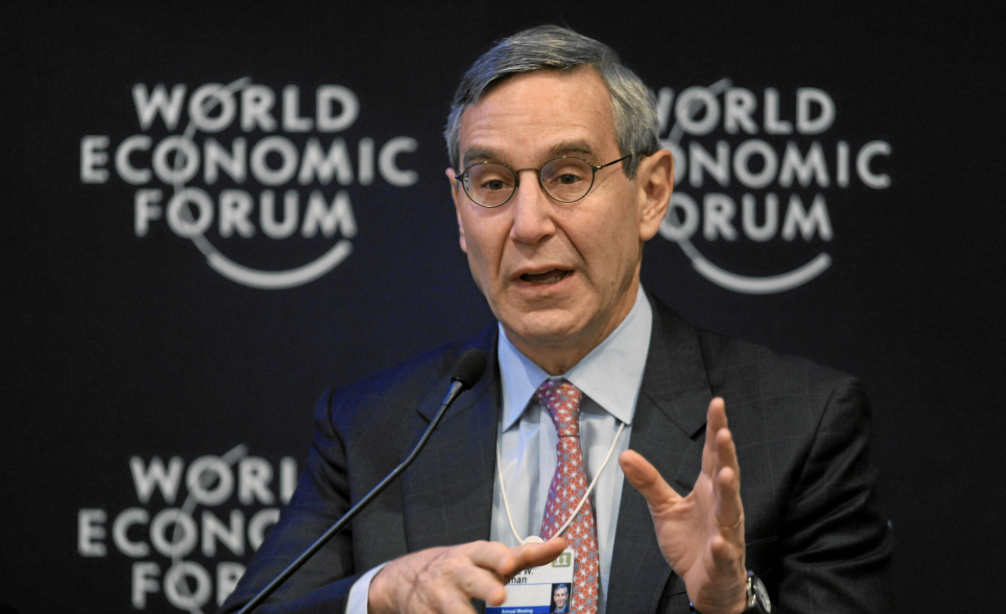
But this thing is Jellybean City. Let’s take on a healthy excerpt of this piece, one graph at a time. Edelman in ital, Murray in Roman.
The English poet John Donne wrote in the 17th century the immortal line, “No man is an island entire of itself.” This memorable declaration of our need for one another is now replaced by insularity, a psychological state shaped by fears and crises. The 2026 Edelman Trust Barometer finds that seventy percent of our 33,938 respondents across 28 nations now are hesitant or unwilling to trust someone who has different values, information sources, approaches to societal problems, or backgrounds than them. This majority holds across income levels, gender, age groups, developing and developed markets.
Well, who isn’t hesitant or unwilling to trust someone who has a wholly different approach to life than they? If this is a “trend,” it’s one that’s been pretty consistent since the dawn of human civilization. And so if it’s the new problem that Edelman proposes to solve, he’s off to a bad start.
We are choosing a closed ecosystem of trust that mandates a limited worldview, a narrowing of opinion, intellectual stasis, and cultural rigidity. … We are withdrawing from dialogue and compromise. We opt for the safety of the familiar over the perceived risk of innovation. We prefer nationalism to global connection. We choose individual benefit over common advancement, the Me over the We.
Again: Name a time in human history when the opposite of the above could be said: “We are embracing dialogue and compromise. We opt for the potential of the unknown over the safety of the familiar. We sacrifice the wellbeing of ourselves and our families over common advancement.” Said no society very consistently, ever. We have exciting new problems in the world. This isn’t one of them.
How did we get here? In its quarter century, the Trust Barometer has captured an inexorable erosion of belief in institutions and their leaders. Trust is now local in My Employer, my CEO and my social circle. … Last year, the Edelman Trust Barometer documented a descent into grievance, with 6 in 10 of our respondents telling us that they feel business and government actions harmed them, served the interests of only some, and that the system unfairly favors the rich. Today, our mindset has pulled back from alarm and anger into the hard shell of insularity.
This last sentence is the first one that carries even a faint ring of insight (though not enough to excuse the capitalization of “My Employer”). Yes: Perhaps, over the last few years, the air between differing citizens, at least in America, has gone from hot to cold. Day to day, I think I prefer the cold.
Now we are confronted by its consequences. The first is resistance to change. Our November flash poll, Trust and Artificial Intelligence at a Crossroads, found that by over a two-to-one margin, the U.S., UK and Germany reject the growing use of AI. Seventy percent in the U.S. believe that CEOs are not telling them the truth about job losses due to AI. Second, we see pervasive nationalism, with deep preference for domestic over multinational brands (31 points in Canada and 29 points in Germany). Third, societies are losing the capacity to act, with climate action stalled in favor of short-term economic interest and urgent local projects such as affordable housing blocked. Fourth, and most troubling, is a global loss of optimism. On average, only 15% of people in developed markets believe that the next generation will be better off, while the APAC powerhouses of Singapore, Thailand, India, and China all show double-digit declines in this optimism since last year.
I love it when big shots in Davos puff on their cigars talking about everyone else’s “resistance to change.” I wrote what I consider to be my last word on this subject in my book, An Effort to Understand:
It’s not that people don’t like change. It’s that people realize just how truly dangerous change really is, to the fine-tuned functioning of the social organisms that give their lives sustenance, safety and meaning. People demand more than a rational reason to make a change; they demand a leader who they trust to pull off the difficult trick. Because yes: People would rather die slowly together—which, after all, is what we are all doing anyway—than risk blowing catastrophically apart.
So to leaders who wonder why they can’t get people on board for a necessary change: It might not be the change you’re proposing that makes people nervous.
It might be you, who are failing to give them confidence.
There is a way to counter insularity, through a novel concept called Trust Brokering. A Trust Broker helps to create a path for progress and cooperation despite insularity by surfacing common interests and translating realities. The primary Trust Broker must be My Employer — proximate and reliable. While each institution is expected to broker trust, the employer is the only one seen as doing it well by a majority, at 58 percent. The office is now considered the safest space for discussion of difficult topics because there are rules for behavior. It is My Employer that translates macro challenges such as AI, globalization and affordability into practical applications. And crucially, you can see tangible change in your day-to-day life when leaders commit to new decisions.
A “novel concept”? Called “Trust Brokering”? In which one “helps to create a path for progress and cooperation despite insularity by surfacing common interests and translating realities”? Now we’re escaping Jellybean City and venturing into the Greater Jellybean Metropolitan Area. Having read this paragraph three times, what I think it means is that the boss at the local State Farm office acts as a “broker” of trust, between the AI-enthused, climate-concerned, optimistic corporate CEO and Marge, the insular-minded customer relations rep. Hey State Farm: Take your “Trust Broker” back and send us a Stand-Up Philosopher.
Why should My Employer do this? Insularity is a bottom-line issue, undermining productivity, causing churn, and threatening the basic ability to lead. There must be frank discussions in the workplace led by the CEO or other leaders. Visible members of the community such as doctors or pastors should be trusted partners in furthering dialogue. Countering insularity will require companies to become poly-national as well as multi-national, giving subsidiaries more freedom of action.
A litany of canards, a paragraph doesn’t make. First: “insularity” is not the problem, it’s the result of a number of problems—one of which is a 150-year-long dearth of “frank discussions in the workplace” by corporate leaders. You’re introducing this concept of “poly-national” in the second-to-last graph, without explaining what it is? And: Let’s get some doctors and pastors in here! What in tarnation is that about?
John Donne was right to conclude his poem with an admonition: “Therefore send not to know for whom the bell tolls, it tolls for thee.” We are becoming inflexible, intolerant, and incoherent in our cocoons. The risks to society from manic swings in popular sentiment and rejection of innovation are real. Self-righteous certainty must give way to belief in the future, guided by My Employer as the leading trust broker.
So, to sum up: The human beings of the earth don’t like each other, don’t trust each other, won’t talk to each other, won’t listen to each other. And the solution to this “psychological state” proposed by the CEO of one of the world’s great public relations firms is: Teaching the goons who run regional offices, local plants and stores around the world to think of themselves not as bosses, but rather as global “Trust Brokers” between big-thinking corporate CEOs and provincial local jamokes.
Richard Edelman, in the times in which we find ourselves, is this really the best you can do? Or—is it the best anybody can do, and you’re just the last guy stuck having to try.