Lots of people are wondering how powerful people seemed so much in a known creep’s thrall.
I keep thinking about Drew Peterson, and me.
Almost 20 years ago, I wrote a story in Chicago Magazine involving Peterson, the Bolingbrook, Illinois cop who got national attention when his wife Stacy disappeared. Particularly suspicious on account of his first wife, Kathleen Savio, had turned up dead in a bloody bathtub a few years before.
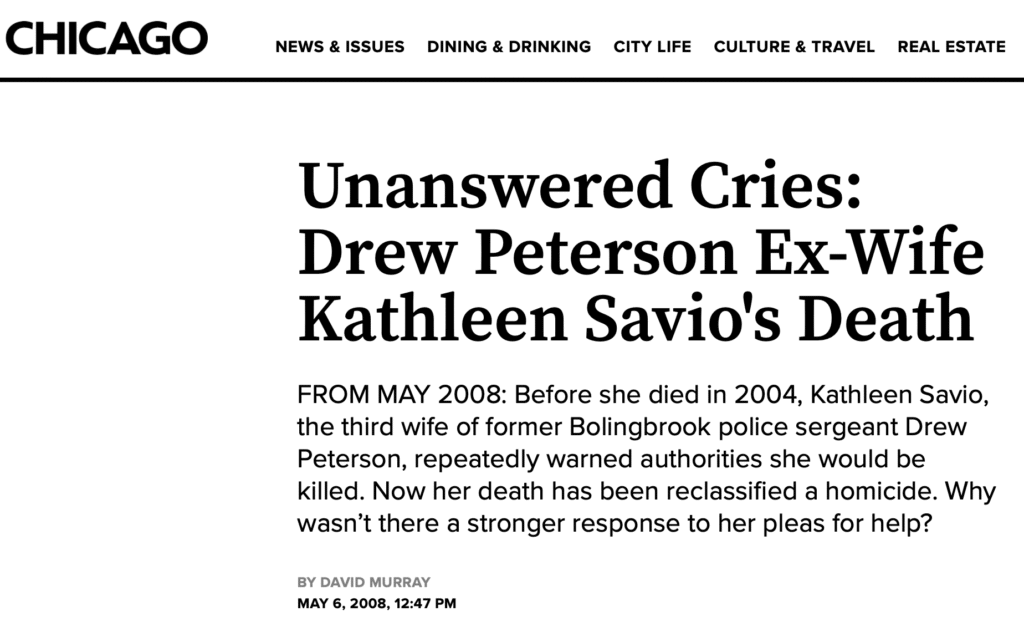
By the time I landed an ever-so-brief jailhouse phone interview with Peterson, I had spent a couple of months talking to everyone living except Peterson. I had spent a crushingly quiet afternoon in the living room of Savio’s sister. I was entirely convinced Peterson had killed both women: at least as convinced as you are, that O.J. killed Nicole.
But when I got Peterson on the phone? I heard myself trying eagerly to impress him, wanting him to think I was cool and in-the-know and even funny. I found myself trying to do all that in the first 30 seconds of the call. I caught myself, and got my questions asked. I got nothing substantive back, except a case of the shakes.
How had this small-town cop sent an ego tractor-beam through the phone line and transformed me, even for a moment, from a skeptical journalist, into a sycophant.
I asked myself that for hours, days, years afterward. It still comes up, when I read pathetic emails that otherwise big people sent to Jeffrey Epstein.
Young people have an expression that’s short for charisma … rizz. (And for those who have it: “rizzlers.”)
Rizz can be used for good and bad. Martin Luther King had it, and gathered people around him in a nonviolent movement for justice. Jeffrey Epstein had it, and got a lot of people ostensibly paid millions or billions for their confidence and good judgment to help him lay bricks in a cathedral of child abuse.
Rizz is as powerful as a riptide, boy, and experience warns me to remind you: You’re more vulnerable to it than you think.