When we were kids, we were warned about creepy old guys in opening their greatcoats and trying to sell us a watch.
Now that we’re grown-ups, we have to watch out for strange guys online, who use AI to analyze our profiles and send us emails like this:
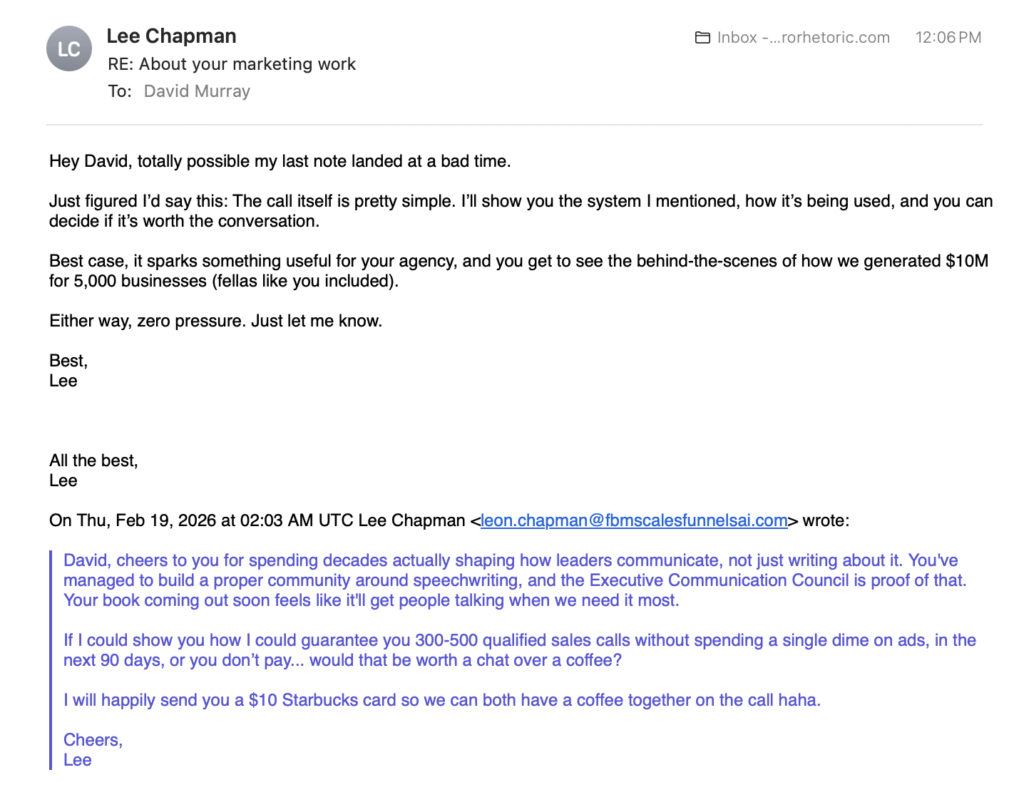
Here’s Lee Chapman.

Here’s a closer look.

Whatever you do, don’t look Chapman directly in the eyes, which are not actually eyes, but rather, “ClickFunnels.”
Does Chapman think I’m sophisticated enough to spend decades “actually shaping how leaders communicate,” but dumb enough to fall for this cornball shit?
Does he think a writer about communications is going to receive this and delete it quietly, without even getting a single day’s post out of it?
Does he “think” at all, or has he sent an AI worm into LinkedIn to generate all this trust-busting uselessness?
Is “he” real at all?
P.S. Watch out for this grinning jagoff too.
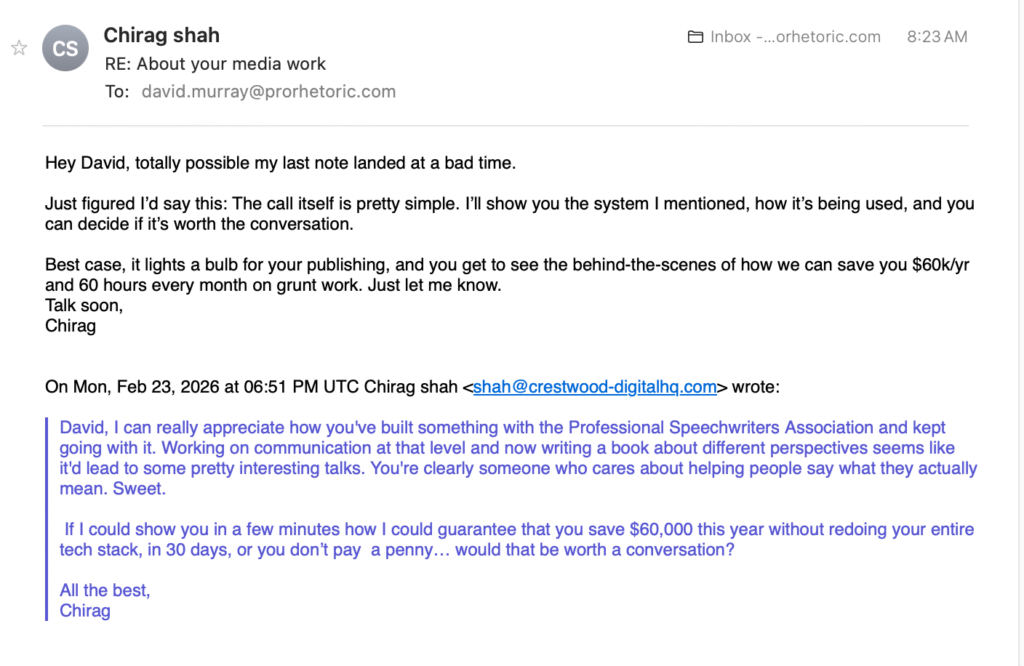

POSTCRIPT: I tagged both of these guys on LinkedIn. Chirag D. Shah commented there, and I appreciate it.
David, I’m the Chirag in question. That trenchcoat photo is going to haunt me for a while. 😭
Yeah, I hired a lead gen agency and clearly didn’t check what they were sending. That’s on me. You’d think someone who works with AI daily would know what AI-generated flattery looks like from the receiving end. Apparently not.
For what it’s worth, you’ve got a new blog subscriber and I’m buying your book as a peace offering.
One relatively new scam is emails directed at authors. What sounds like a real person sends you a message with a fairly accurate analysis of your book, explaining how they can rev up sales with targeted marketing. They often have what look like legitimate web sites. It’s all done using AI. Not as obvious as the Nigerian prince scam, but with the same aim — rid you of your money.